Make debris removal
easier for your crew.
Let’s put your next investment where it will do the most good: automatic cleaning, better debris placement and the gate-picking capability you need.
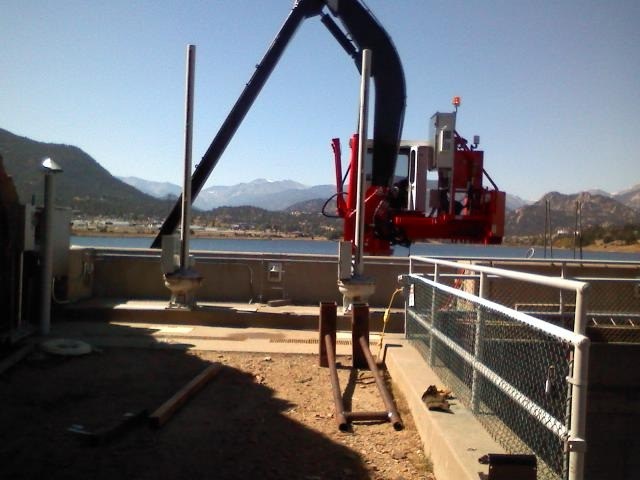
The job continues
after the debris leaves the rack.
You already have two Cross Machine cleaners. The next step is to make them easier to operate and improve what happens to the material they remove. At Dashville, the boom rehabilitation and new gantry hoses give us a good place to start.
Less attendance
Let the cleaner handle routine cycles, day and night.
Better placement
Get debris to a receiving point that works for your crew.
Gate access
Keep a practical, verified way to pick the gates.
Our target is hands-off routine cleaning, 24/7/365, within agreed operating conditions. Maintenance and unusual conditions will still need attention.
Start with the reach
your site needs.
| What matters | A / Modernize the existing cleaner | B / Install an articulating cleaner |
|---|---|---|
| When it makes sense | Keep Dashville’s renewed equipment and add automatic cleaning. | Use a new boom to reach a better debris receiving point. |
| Equipment | Retained boom and gantry with selected mechanical and control upgrades. | New articulated boom, rake and support/travel package. |
| Debris placement | Works within the current reach; added transfer equipment may be needed. | Sized to carry wet debris along the route to the chosen destination. |
| Gate picking | Keep and verify the existing lifting arrangement and interfaces. | Retain the gate cylinder and beam; adapt mounts and hydraulic connections. |
| What decides it | Retrofit cost and the work needed to handle debris after discharge. | Loaded debris reach, clearances and gate-lift compatibility. |
Both options target automatic routine cleaning. A boom conversion on the existing gantry can also be studied; it is not included as a priced option here.
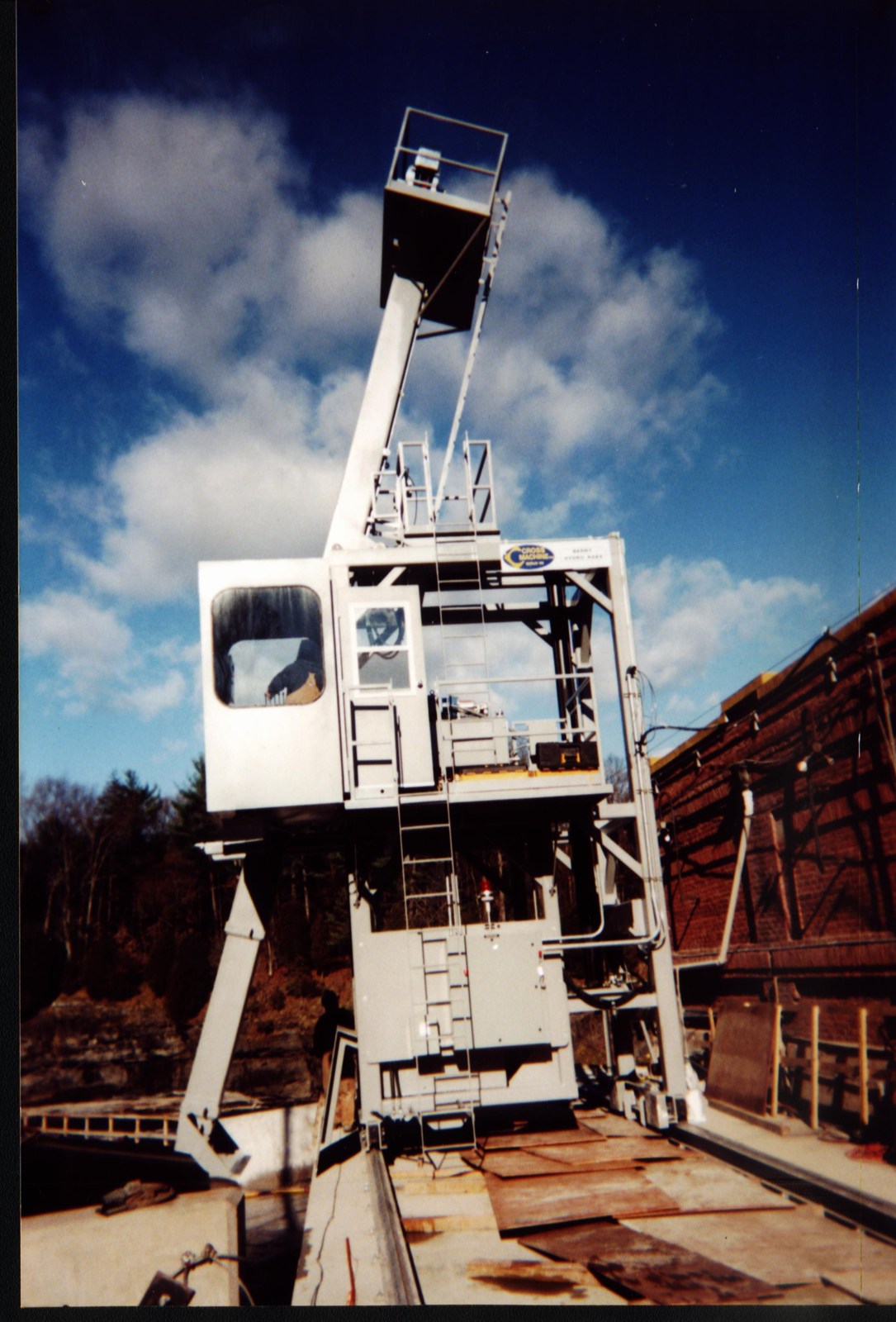
Put the recent repairs
to work for you.
We recently rehabilitated Dashville’s boom and replaced all of the gantry rubber hoses. The machine is in good shape, and our modernization proposal gives that work full credit.
How the recent work shapes the proposal
Keep what’s working
Start with the renewed boom and hoses. Focus the next round of work on controls, motion and the remaining mechanical needs.
Preserve gate picking
Review the picking beam, receptacle and modifications made over the years so the cleaner’s next chapter still serves the gates.
Look at each machine
Walk the debris route with your crew and assess the second cleaner separately. Its needs may be different from Dashville’s.
Recent repair status is based on our completed work. We will confirm current interfaces and gate-lifting requirements during the site assessment.
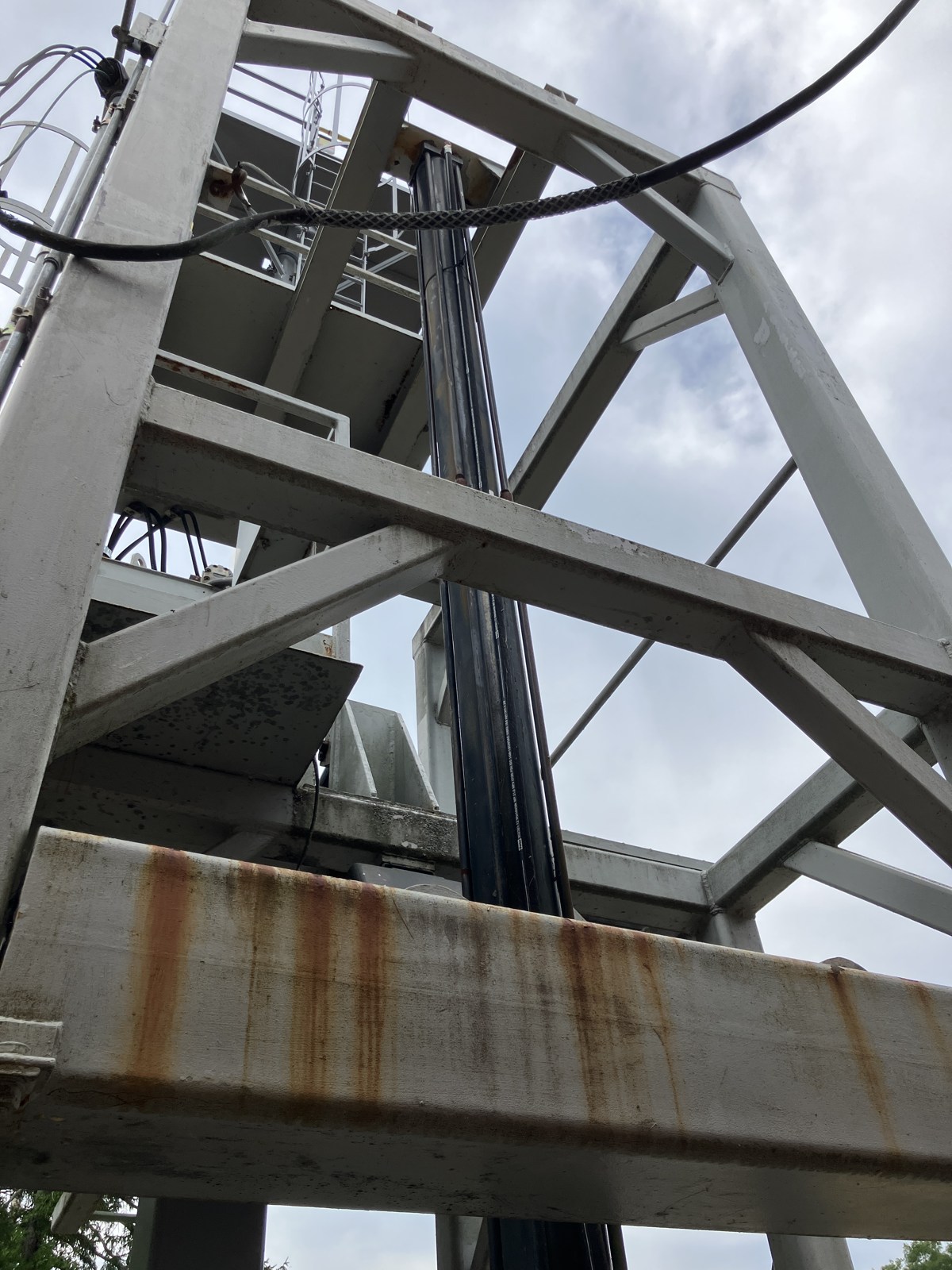
A practical next step
for Dashville.
With the recent repairs complete, modernization deserves the first look. We would add controls and feedback for automatic cleaning, then address the remaining mechanical work.
What we would change at Dashville
Spend where it helps
Check remaining wear and service access. The budget gives credit for the completed boom rehabilitation and gantry hose replacement.
Make motion controllable
Review the hydraulics, add position feedback and set limits so the cleaner can follow a repeatable cycle.
Finish the debris route
If the discharge point still leaves too much handling for your crew, price a transfer solution alongside the cleaner upgrades.
Modernization keeps the existing reach. Any added debris-transfer equipment or changes to gate-picking hardware will be scoped and priced separately.
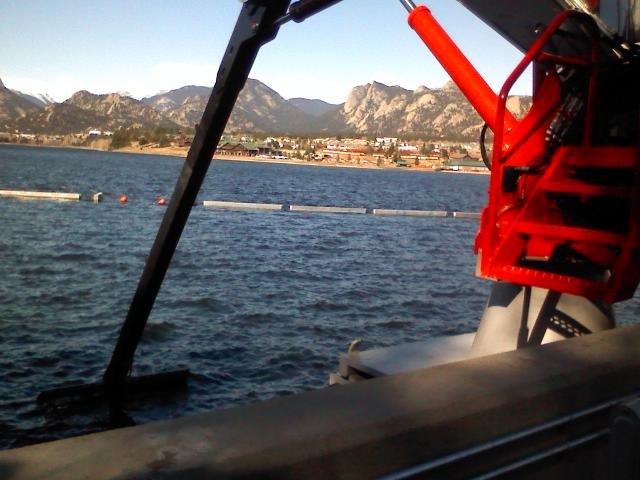
Reach the place
you want the debris to go.
An articulating boom earns its place by improving material handling. We would start at the receiving point your crew wants to use, then design the machine to carry and place debris there.
How we would lay out the new system
Choose the destination first
Measure the drop location, discharge height and route from the rack. That tells us the reach the boom needs while carrying a load.
Design for wet debris
Size the boom and rake together, checking capacity, retention and clearance through the full movement.
Keep the existing gate-lift function
Start with the gate cylinder and picking beam already on site. Check their supports and operating position, then design the new cleaner around them.
The gate budget assumes serviceable, compatible existing equipment and local integration. Replacement gate equipment or a different structural load path would need a separate scope and quote.
Keep the gate lift
your crew already knows.
Start with the cylinder and beam
The records identify a gate-lift cylinder, picking beam, receptacle and manual hydraulic control. Our starting point is to retain serviceable equipment.
Adapt the connections
Allow for local mounting and beam-interface work, hydraulic connections and gate-specific checks. The main controls package already includes gate-mode integration.
Keep the operating position clear
The existing label prohibits gate-cylinder operation with the boom extended. Confirm the correct position for the new arrangement and interlock it with automatic cleaning.
Verify where the force goes
Trace the cylinder’s lifting reaction through the beam, machine and site supports. Confirm condition, stroke and gate forces before accepting reuse or selecting another method.
Option B includes a provisional allowance for this reuse approach. The records do not establish current condition or capacity; replacement equipment and structural redesign remain separate scope.
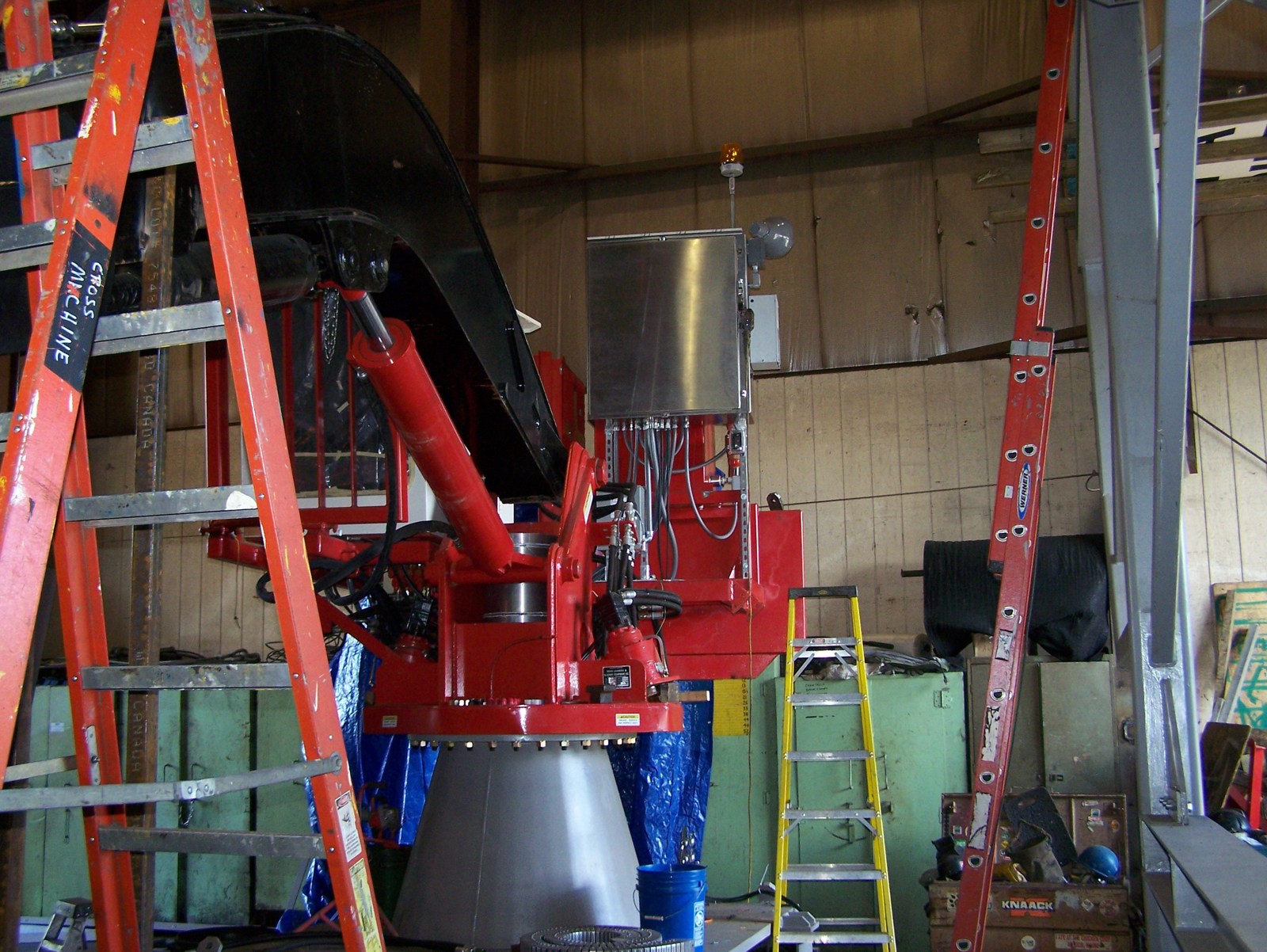
We’ve built this kind
of system at Olympus Dam.
At Olympus Dam in Colorado, we brought an articulating boom, hydraulics and automatic controls together in one rack cleaner. That project gives us relevant experience to bring to Central Hudson.
Automation built into the Olympus system
Cleaning starts when it’s needed
The Olympus controls support starts from water-level differential, a timer or a remote command.
The controls track the boom
Absolute encoders report swing, main-boom and knuckle position. Station switches and interlocks govern movement.
Operators stay in control
Manual and semi-automatic modes sit alongside automatic operation, with water levels, timers, alarms and encoder functions on the HMI.
These functions are documented in the Olympus O&M manual, pp. 6–10. Central Hudson’s design and year-round performance targets will be agreed for your sites.
From the first pass
to the last discharge.
Your goal is hands-off cleaning, 24/7/365. We propose a complete automatic cycle for either option, with checks at each stage and a clear call for help when the machine needs it.
01 / Start
Water-level difference or a scheduled cycle calls for cleaning.
02 / Check readiness
Confirm the attachment, machine position, protected area and receiving point are ready.
03 / Clean the rack
Follow the agreed path, watching position and hydraulic response as the rake works.
04 / Place the debris
Carry the load along the checked route and discharge at the agreed receiving point.
05 / Check the result
Log the cycle and recheck water levels. Repeat when needed, within the limits set for the machine.
06 / Park or call for help
Return to the agreed resting position, or send operations a clear alarm and recovery instructions.
Gate picking stays operator-controlled and disables automatic cleaning. Cleaning resumes after attachment, position and area checks; a full bin or blocked discharge also prevents a cycle.
Give the machine the
information it needs.
Position through the cycle
Track the critical axes and travel position. Check limits and flag readings that do not agree before the next movement.
A view of machine health
Monitor hydraulic pressure, oil level and temperature, motor health and water levels. Confirm that each cleaning cycle finishes.
Safe access and recovery
Develop guarding, emergency stops and mode checks for the site. Make fault recovery a deliberate, authorized action.
Useful information for operations
Show status and alarms locally, keep an event history and connect to SCADA using Central Hudson’s standards.
We will agree the controls platform, sensors, safety design and communications during engineering. Remote access is subject to Central Hudson approval.
Call for help when conditions change.
| If this happens | How we propose to respond |
|---|---|
| An overload or stalled movement | Stop or hold in a verified safe state. Permit a limited recovery attempt only where it has been validated. |
| Position or level readings disagree | Prevent the affected automatic movement and identify the suspect reading in an alarm. |
| Ice, unusual debris or an excessive load | Pause automatic cleaning and ask the operator to assess the condition. |
| The bin is full or the discharge is blocked | Prevent another cycle and notify operations before collecting more debris. |
| Power or communications are lost | Follow the agreed local response and require the necessary checks before restarting. |
| Someone enters the protected area or presses E-stop | Apply the engineered safety response, then require an authorized reset and readiness checks. |
We will verify each response during design and testing, including how the machine holds a load and reaches a safe state.
Agree what good looks like.
Then test it together.
Show the complete debris route
Demonstrate rack coverage, load retention and placement at the agreed receiving point. Watch how much handling the crew still needs to do.
Check gate operation and fault response
Verify gate travel, hydraulic holding, the supported operating position and mode interlocks. Test the agreed machine response to jams, invalid feedback and power loss.
Run under working conditions
Agree a witnessed trial with representative water and debris, limits on operator intervention and follow-up for seasonal conditions.
Leave your team ready
Provide drawings, manuals, program backups, initial spares and training, with a clear maintenance schedule.
We will set availability and intervention targets together. A site trial is the first check; seasonal follow-up is needed to assess year-round performance.
What to budget
for each option.
Per-machine budgets for the work below. Option A credits Dashville’s recent repairs. Option B includes integrating the existing gate cylinder and picking beam, subject to condition and compatibility checks.
| Budget component | A / Modernize | B / Articulating |
|---|---|---|
| Equipment and engineering | $246.5–$448k | $635–$992.5k |
| Freight, installation & commissioning | $45–$80k | $80–$135k |
| Installed budget / machine | $291.5–$528k | $715–$1,127.5k |
| Second cleaner / combined project | Quote after assessment | Quote after assessment |
Revised September 22, 2026; USD planning budgets, not quotations. A new traditional cleaner with less automation is $500k–$650k supply only. Gate equipment replacement and added debris-transfer equipment are excluded.
Compare the full job
before choosing a machine.
Equipment through commissioning
The ranges include assessment, the listed mechanical and controls work, shop testing, freight, rigging, installation and commissioning.
Retain the existing gate lift
Option B allows for local integration of the existing cylinder and beam. Gate-mode controls are in the base controls package. Option A retains the existing arrangement.
Other costs to plan for
Gate equipment replacement or structural redesign, added debris-transfer equipment, major civil/rail/power work, tax, financing and lost generation are excluded.
The second cleaner
We will assess and price it on its own condition and site needs. Dashville’s recent repairs should not be assumed to apply to both machines.
Gate integration is conditional on the retained equipment and support arrangement being suitable. Any different lifting method will be scoped and quoted before a commitment.
Plan around your outages.
Learn from the first installation.
We would assess both cleaners up front, then sequence the work around your operating needs and the condition of each machine.
01 / Walk both sites
Review the equipment and recent repairs with your crew. Trace the debris route and check the gate-picking arrangements.
02 / Choose and price
Confirm reach under load, gate duties and what can be reused. Price the remaining interfaces before choosing the option.
03 / Engineer and build
Agree the cleaning sequence, gate-picking method, interlocks and acceptance tests, then proceed with fabrication.
04 / Test in the shop
Witness the normal cycle and simulated faults before the first machine ships.
05 / Commission on site
Start with supervised operation, check actual site conditions and move into unattended service in agreed stages.
06 / Apply what we learn
Use the first installation’s results to refine the second, along with shared spares, training and service needs.
We will set dates after confirming supplier lead times and outage windows, including how cleaning will be handled while a machine is out of service.
Less time tending the rake.
Less time moving the same debris.
Routine attendance
Record the time spent starting, watching and recovering cleaning cycles. Use that baseline to judge what automation gives back to your crew.
A cleaner intake
Compare water-level difference and completed cleaning cycles under similar water and debris conditions.
Maintenance you can plan
Track leaks, wear, unplanned repairs and downtime to see where the upgraded equipment is helping and where attention is still needed.
A shorter handling job
Count the extra moves needed after discharge. Confirm that the receiving point works for the crew and keeps gate access clear.
We will build the operating case from your site records. Any payback estimate should use measured labor, maintenance and performance data.
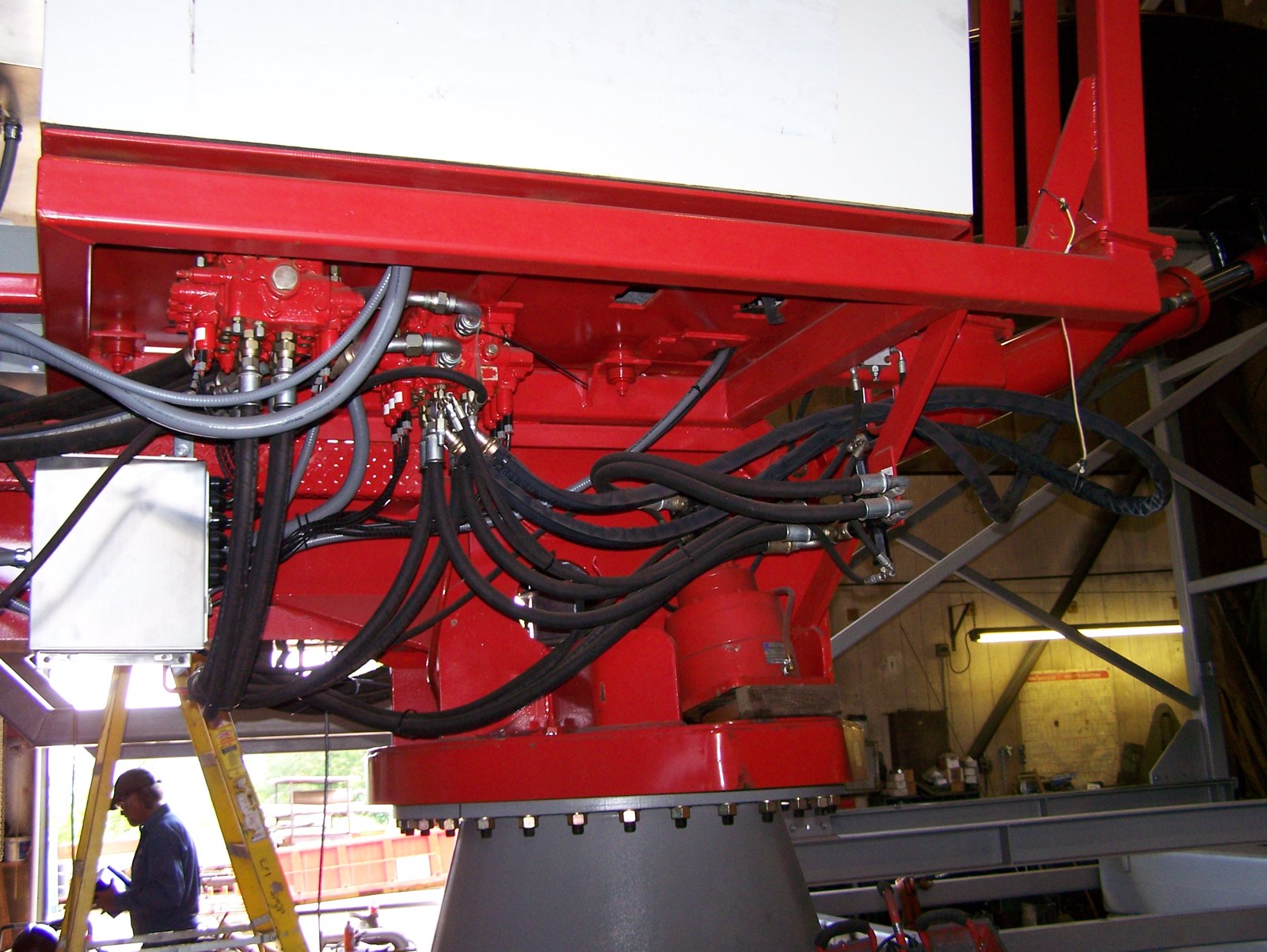
We know your cleaners.
We can take them further.
We built your existing rack cleaners, and we have just been back into Dashville’s boom and hoses. We can bring that knowledge, together with our Olympus experience, to the decision in front of you.
What we bring to Central Hudson
Advice grounded in your equipment
Compare keeping and improving the cleaner with replacing it, with proper credit for the repairs you have already made.
Experience beyond the boom
Draw on our work combining articulated motion, hydraulics and automatic controls at Olympus.
A team for the whole job
Work with us from mechanical design and fabrication through hydraulic and electrical integration, shop testing and commissioning.
Cross Machine Inc. · Hydropower equipment, fabrication and field service · Berlin, New Hampshire
Show us where
you want the debris to go.
That is the place to start. Let’s review both cleaners with your operations team and put a complete, priced recommendation in front of you.
Talk through a working day
Show us the cleaning workload, recurring faults, seasonal debris and the jobs that still keep someone at the machine.
Walk the route and gate lifts
Confirm the receiving point, gate weights and picking interfaces, then review site access, SCADA and outage windows.
Choose with the whole cost in view
We will recommend a path for each cleaner, define the work included and prepare an updated commercial proposal.
Sean Patry · President, Cross Machine Inc.
patrys@crossmachine.com · 603-752-6111 · Berlin, New Hampshire
Equipment scope & pricing
The following allowances show what is included in each option, per machine in USD. Option A reflects Dashville’s recent repairs. Option B assumes reuse and local integration of the existing gate cylinder and picking beam. Gate controls are included in the main controls package. Added debris-transfer equipment is separate; each cleaner needs a site-specific quote.
A / Modernize the existing cleaner$291.5–$528k installed*
| Work included | Budget range | What the allowance covers |
|---|---|---|
| Condition assessment & mechanical design | $22.4–$39.2k | Survey the machine, decide what can be reused and design the mechanical interfaces. Review gate picking; any lifting-equipment changes still need pricing. |
| Targeted boom checks & mechanical refinements | $11.2–$22.4k | Check and refine the recently rehabilitated boom. Retain compatible renewed parts; this budget does not repeat the boom overhaul or gantry hose replacement. |
| Travel, structure & drive repairs | $22.4–$50.4k | Repair local travel, structure and drive issues identified in the agreed scope. Major rail and foundation replacement is excluded. |
| Hydraulic motion-control upgrades | $39.2–$72.8k | Adapt the power unit, valves, manifolds and filtration for controlled motion. Retain serviceable compatible equipment and the new gantry hoses. |
| Automation hardware & panel integration | $56–$95.2k | Supply and integrate controls, I/O, touchscreen, sensors, enclosures and networking. Agree the platform and safety design during engineering. |
| Controls software & verification | $78.4–$140k | Develop and test the cleaning sequence, interlocks, fault handling and HMI/SCADA interfaces. Field commissioning is listed separately. |
| Final shop acceptance, documentation & spares | $16.9–$28k | Test the integrated machine in the shop; prepare manuals, backups and initial spares for delivery. |
| Freight, installation & site commissioning | $45–$80k | Deliver, rig and install the equipment, then complete site acceptance and operator training. Assumes an accessible site and a planned outage. |
| Installed budget | $291.5–$528k | *For the listed scope. Option A excludes any gate-picking hardware changes. Both options exclude added debris-transfer equipment, tax and other stated exclusions. Option B assumes suitable retained gate equipment and local integration. Replacement cylinder/beam, major structural changes or a different lifting method require separate pricing. |
B / Install an articulating cleaner$715–$1,127.5k installed*
| Work included | Budget range | What the allowance covers |
|---|---|---|
| Site survey, structural review & mechanical design | $44.6–$72.5k | Survey debris reach, support loads, clearances and machine interfaces. Check the existing gate-cylinder arrangement and trace its supporting load path; detailed local adaptation is listed separately. |
| Articulating boom, slew & pedestal package | $245.1–$334.6k | Supply the custom boom, cylinders, pivots, slew and pedestal for the agreed machine duties. Current supplier quote required; gate-cylinder reaction and its supports must be established before selection. |
| Base, trolley & support steel | $50.1–$89.2k | Build the base, trolley and supporting structure for the site. The Olympus steel list provides a size reference; Central Hudson quantities are still to be designed. |
| Rake head & debris-retention assembly | $27.9–$50.2k | Build the rake, combs and debris-retention assembly to suit the rack and expected debris. |
| Hydraulic power, valves & hose package | $44.6–$72.5k | Supply and integrate the main electric hydraulic power unit, valves, hoses and filtration. Gate-specific connection changes are in the integration row; a second power unit is not assumed. |
| Automation hardware & panel integration | $61.3–$100.4k | Supply and integrate controls, I/O, touchscreen, axis feedback and safety devices. Includes operator-controlled gate mode and position checks within the main controls package. |
| Controls software & verification | $89.1–$150.5k | Develop and test boom motion, limits, fault handling and HMI/SCADA interfaces, including operator-controlled gate mode and separation from automatic cleaning. |
| Final assembly, shop acceptance, documents & spares | $50.1–$78.1k | Assemble and test the overall system, with manuals, backups and initial spares. Gate-specific fit and hydraulic checks for the retained arrangement are identified separately. |
| Existing gate-lift integration (provisional) | $22.2–$44.5k | Retain a serviceable, compatible gate cylinder and picking beam. Allow for local mounting/interface work, incremental hydraulic connections and gate-specific fit/holding/function checks. Routine gate-mode controls are already included above. Cylinder/beam replacement, major support changes and a different lifting method require a separate quote. |
| Freight, installation & site commissioning | $80–$135k | Deliver and install the machine, then commission it during one planned outage. Includes additional gate-connection work, witnessed operation/holding checks and position-interlock checks, with shared mobilization and training. |
| Installed budget | $715–$1,127.5k | *For the listed scope. Option A excludes any gate-picking hardware changes. Both options exclude added debris-transfer equipment, tax and other stated exclusions. Option B assumes suitable retained gate equipment and local integration. Replacement cylinder/beam, major structural changes or a different lifting method require separate pricing. |
Supplier pricing referencesSix component checks
| Component | Listed price | Application to this estimate |
|---|---|---|
| Parker PAVC65-family piston pump | $7,317–$8,145 each | Related family configurations; exact duty, rotation and control differ. Hydraulic component benchmark only. |
| 25 hp IronHorse motor | $2,368 each | MTCP2-025-3BD18, published catalog reference; reconfirm by quote. Motor only, not a complete power unit. |
| 10-inch operator touchscreen | $785 each | C-more CM5-T10W. Functional price comparator; Central Hudson's approved controls platform may cost more. |
| Radar water-level sensor | $1,180 each | VEGAPULS C 21 listing. Two sensors suggest $2,360 before mounts, wiring and integration; sensing design remains open. |
| 3/4-inch hydraulic hose | $5.91/ft | R2S-12: 50 ft = $295.50. Bulk single-line hose only; not an interchangeable twin-line reel-hose selection. |
| A36 plate, 1 × 48 × 48 inches | $1,495.30 per plate | Retail reference, approximately $2.29/lb using nominal steel density. Bulk sizes, grade, cutting and freight change purchase cost. |
Project records & estimate basisWhat we used and what comes next
Dashville and Olympus project files
Dashville gate-cylinder drawing, hydraulic list, picking-beam/receptacle photos and manual gate-control photo, including its boom-position warning. Recent repair history; Olympus O&M pp. 6–12 and equipment/material lists.
How we built the budget
Our $500k–$650k benchmark is for one new traditional machine, supply only. Supplier listings provide selected parts checks. Labor rates, most hours, custom equipment and site costs remain estimating assumptions.
Using the Olympus records
The early documents show 75 hp and different pump/travel arrangements; the later manual describes a 25 hp-class system. We used the later configuration for scale and will size Central Hudson’s equipment to your sites.
What we still need to confirm
Gate-cylinder and beam condition; stroke and lifting forces; where cylinder reaction is supported; the correct machine position; compatibility with the new cleaner; debris reach; and current supplier quotes.
Gate-lift basis: the existing cylinder drawing, hydraulic list, picking-beam photographs and manual gate-control photograph. The gate-control label prohibits operation with the boom extended. Condition, supporting load path and the new machine’s permitted operating position must be verified. This allowance covers local integration of suitable retained equipment.
Controls and communications will follow Central Hudson’s requirements. We propose local machine control, segmented communications and approved remote access, using guidance such as NIST SP 800-82 Rev. 3. The final network and access arrangements will be agreed during engineering.